
Digitalization in Process Automation: From Data to Decisions
On this page
Digitalization in process automation means using digital technologies to change how plants are engineered, operated and maintained: replacing paper, disconnected spreadsheets and manual rounds with connected devices, integrated data and digital workflows. It builds on the automation systems plants already have, and its value comes from better, faster decisions.
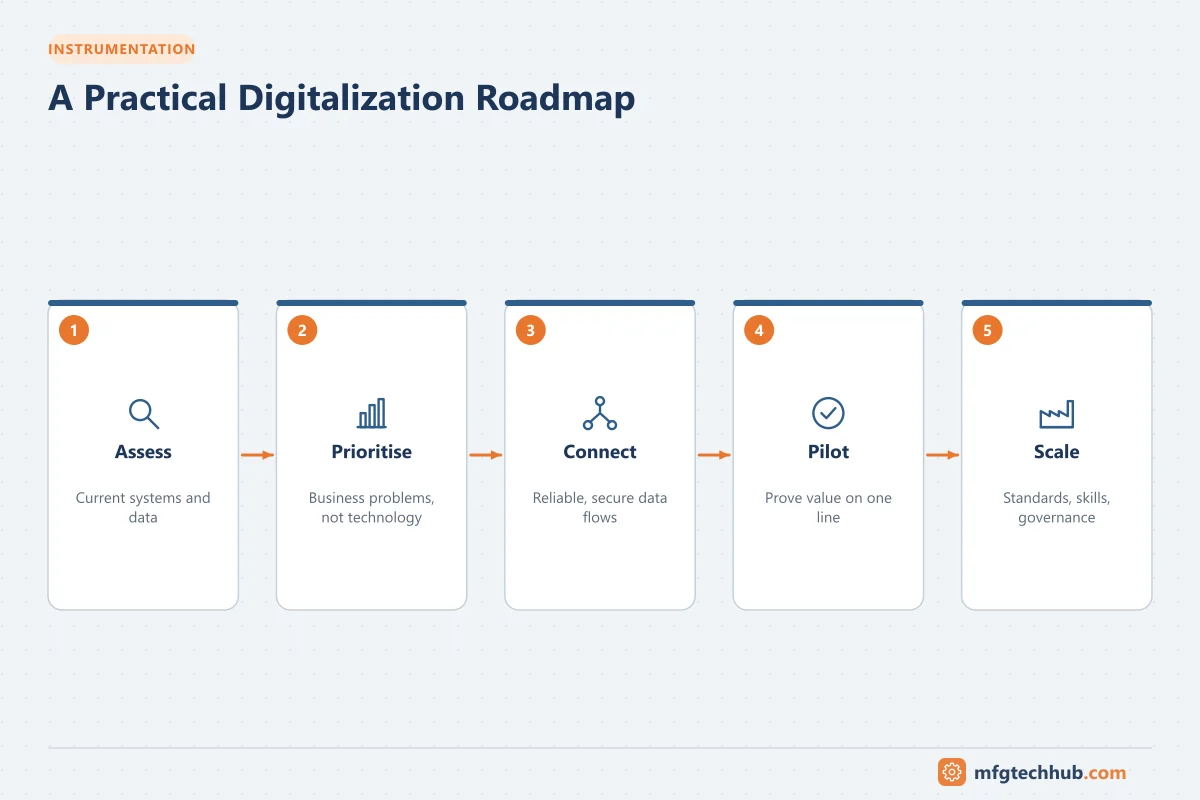
This article explains the main areas of digitalization in process plants and a practical way to approach them.
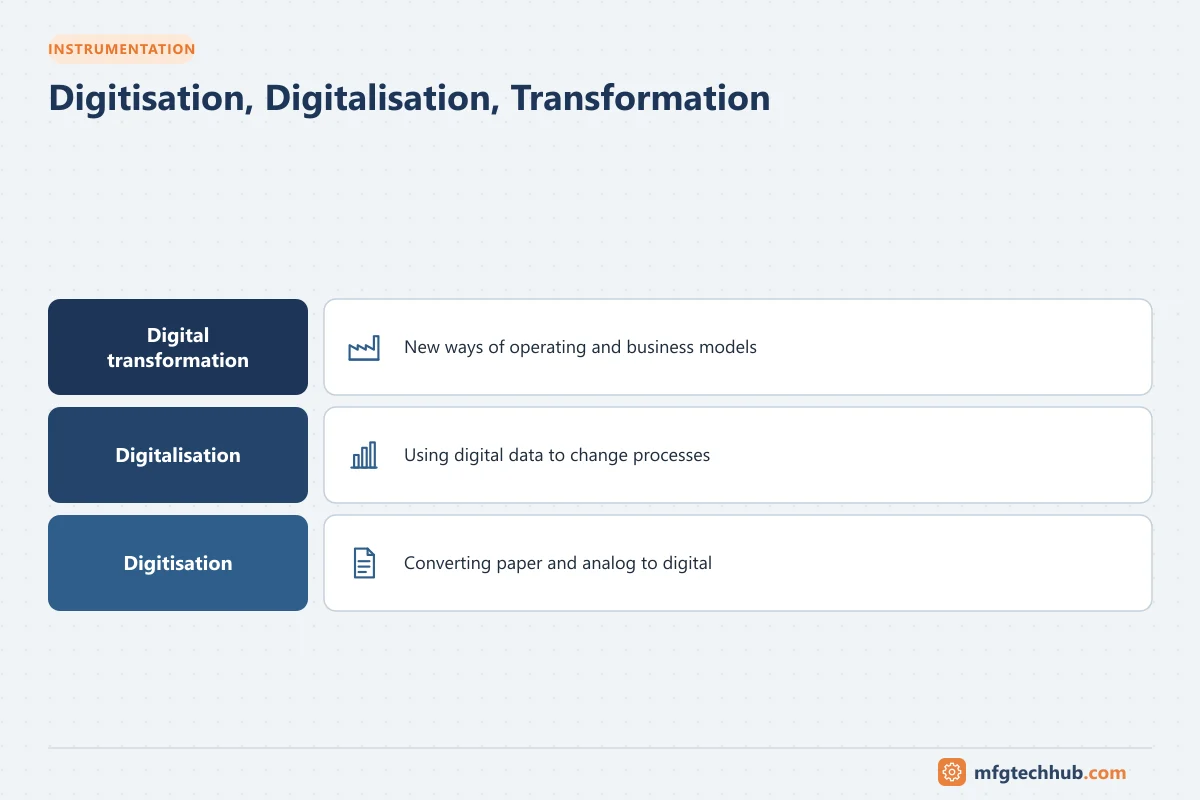
Digitization vs digitalization vs digital transformation
| Term | Meaning | Example |
|---|---|---|
| Digitization | Converting information into digital form | Scanning paper logs |
| Digitalization | Using digital data to change processes | Electronic shift logs linked to alarms and trends |
| Digital transformation | Changing the business model or organization | Remote operations centers serving several plants |
Key areas of digitalization
1. Digital field devices and connectivity
Smart instruments, HART, fieldbus, Ethernet-APL and wireless sensors provide more data and diagnostics than analog signals. See Industry 4.0 and Smart Instrumentation.
2. Integrated plant data
Historians, data lakes and IIoT platforms combine process, laboratory, maintenance and production data with common context such as assets, units and batches. See Manufacturing Data and Analytics.
3. Digital engineering
- Intelligent P&IDs and instrument databases. See P&ID Software Tools
- Virtual commissioning and simulation. See Digital Twins
- Standardized modules and templates (for example MTP for modular plants)
4. Digital operations
- Electronic shift logs and handovers
- Digital operating procedures and checklists
- Alarm management with rationalized alarms and analytics
- Mobile devices for field operators, with access to data and procedures
5. Digital maintenance
- Asset management systems using device diagnostics
- Condition monitoring and predictive maintenance. See Predictive Maintenance Example
- Electronic permits to work and work order management
- Augmented reality support for technicians
6. Remote and centralized operations
Remote monitoring centers support multiple sites with specialist expertise, reducing travel and improving response. Secure remote access is essential. See ISA-99 / IEC 62443.
7. Advanced analytics and AI
Soft sensors, anomaly detection, optimization and decision support. See AI and Machine Learning in Process Control.
Typical benefits
- Faster troubleshooting with data at hand
- Fewer unplanned shutdowns through early detection
- Reduced paperwork and fewer transcription errors
- Better compliance with electronic records and audit trails
- More consistent operation across shifts and sites
- Energy and yield improvements from optimization
Common obstacles
| Obstacle | How to address it |
|---|---|
| Legacy systems that do not share data | Gateways, OPC UA, historians, NAMUR Open Architecture |
| Poor data quality | Instrument maintenance, validation rules, time synchronization |
| Many disconnected pilots | Prioritized roadmap, common platforms and standards |
| Cybersecurity concerns | Security architecture designed in from the start |
| Skills gaps and resistance to change | Training, involving operators early, demonstrating quick wins |
A practical roadmap
- Assess the current state: systems, data availability, pain points and skills.
- Prioritize use cases by value and feasibility, such as reducing unplanned downtime or paperwork.
- Build foundations: secure connectivity, a historian or data platform, standard asset naming, and data quality.
- Deliver quick wins that users see and value, such as electronic logs or diagnostics dashboards.
- Scale proven solutions across units and sites.
- Develop people: combine automation, IT and domain skills, and assign clear ownership.
- Measure results and adjust the roadmap.
Frequently asked questions
Is digitalization only for new plants?
No. Most digitalization happens in existing (brownfield) plants. Gateways, historians, HART multiplexers, wireless sensors and secure data platforms allow existing control systems to share data without replacing them. New plants can build digital capabilities in from the start, but the biggest total value is usually in improving the plants that already exist.
Where should a plant start with digitalization?
Start with a clear, measurable problem, such as unplanned downtime on critical equipment, paper-based shift logs, or slow troubleshooting. Build only the data and connectivity needed for that use case, prove the value, and then reuse the same foundations for the next use case.
Does digitalization replace operators and technicians?
In process plants, digitalization mainly changes how people work rather than replacing them. It removes routine data collection and paperwork, gives better information for decisions, and lets specialists support more equipment. Skilled people are still needed to interpret data, act on it and keep the plant safe.
Key takeaways
- Digitalization changes how plants are engineered, operated and maintained using connected data.
- Key areas include smart devices, integrated data, digital engineering, operations, maintenance and analytics.
- Success needs strong foundations (data quality, security, standards) and focus on valuable use cases.
- People and workflows matter as much as technology.
Related tutorials
Before you apply this in a plant: this article is for education. Always check the current edition of the relevant standards, the manufacturer's documentation for your exact product and version, and your site's procedures. Safety-related work needs qualified personnel. See our editorial policy.