
Sustainable Energy Solutions for Industrial Plants
On this page
Manufacturers face growing pressure to cut energy costs and greenhouse gas emissions at the same time. Sustainable energy is not one technology but a combination: measuring energy accurately, using less of it, recovering waste heat, electrifying processes, and switching to low-carbon sources. Instrumentation and control engineers play a central role, because every step depends on measurement and automation.
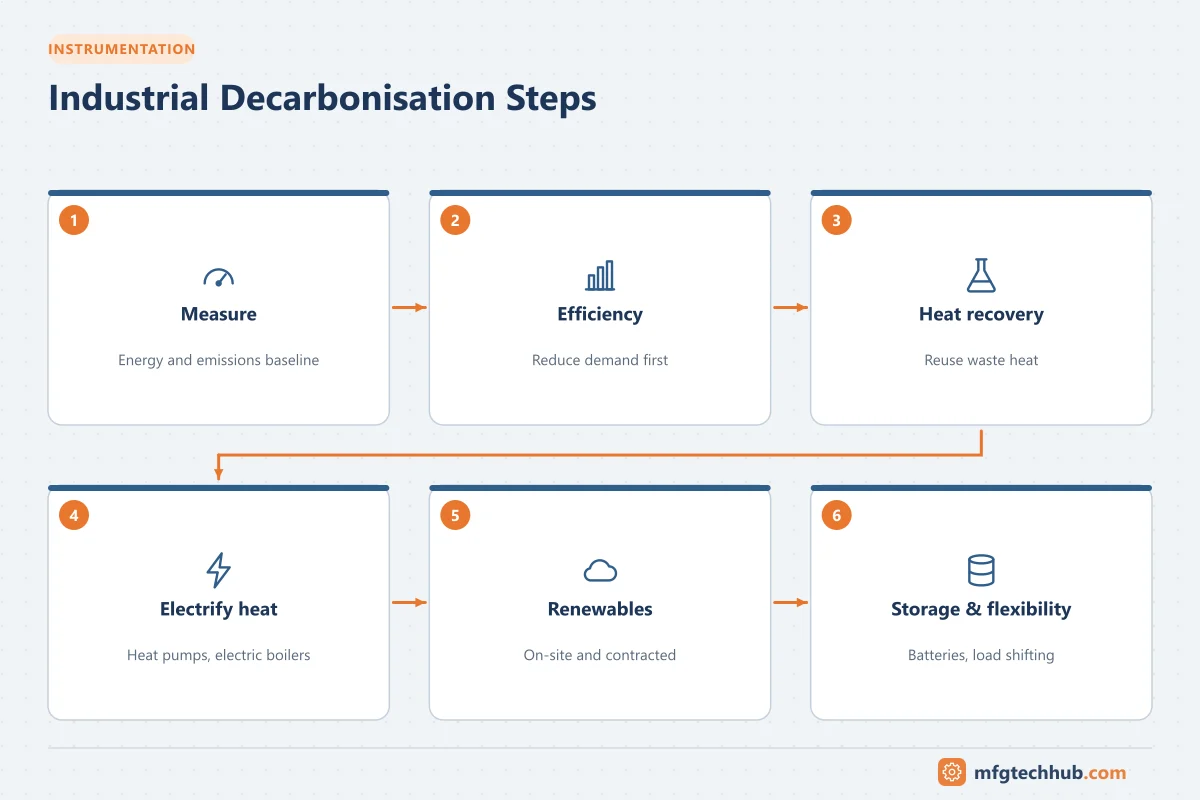
Step 1: Measure and manage
You cannot manage what you do not measure. A sustainable energy program starts with:
- Energy metering of electricity, gas, steam, compressed air and water at key points. See Digital Power Meters and Energy Monitoring.
- Energy performance indicators, such as kWh per tonne or per unit produced.
- An energy management system, often following ISO 50001, which sets policy, targets, action plans and continual improvement.
- Emissions accounting: Scope 1 (direct fuel combustion), Scope 2 (purchased electricity and heat) and, increasingly, Scope 3 (supply chain), following frameworks such as the GHG Protocol.
Step 2: Reduce demand through efficiency
Efficiency is usually the cheapest carbon reduction. Common opportunities:
| Area | Typical measures |
|---|---|
| Motors and drives | Premium efficiency motors, VFDs on pumps and fans, right-sizing. See VFDs and Soft Starters |
| Compressed air | Leak repair, pressure reduction, controls for multiple compressors, heat recovery |
| Steam systems | Steam trap monitoring, insulation, condensate return, boiler combustion control |
| HVAC and lighting | LED lighting, controls, free cooling |
| Process control | Better tuning and advanced control to reduce variability and energy use |
See Industrial Energy Efficiency Solutions for details.
Step 3: Recover waste heat
Large amounts of energy leave factories as warm exhaust, cooling water and compressor heat. Options include:
- Heat exchangers to preheat feed water, combustion air or process streams
- Compressor heat recovery for space or process heating
- Heat pumps to raise low-grade heat to useful temperatures
- Organic Rankine cycle (ORC) units to generate electricity from medium-temperature waste heat
Step 4: Electrify heat
Process heat is a major source of industrial emissions. Where low-carbon electricity is available, electrification can reduce emissions:
- Industrial heat pumps for low- and medium-temperature heat (for example in food, beverages and chemicals)
- Electric boilers and electrode boilers
- Induction and resistance heating for metals and specific processes
- Electric infrared drying and curing
Electrification increases electrical demand, so it must be coordinated with power system capacity and load management.
Step 5: Use on-site and off-site renewable energy
- Rooftop and ground-mounted solar PV
- Wind power at suitable sites
- Biomass or biogas where fuel is sustainably available, for example from process residues
- Power purchase agreements (PPAs) and green tariffs for off-site renewable electricity
Step 6: Add storage and flexibility
- Battery energy storage for peak shaving, backup and renewable integration
- Thermal storage (hot water, chilled water, ice or molten salt) to shift energy use
- Demand response to support the grid and earn revenue
Step 7: Monitor emissions and environmental performance
Instrumentation supports compliance and reporting:
- Continuous emission monitoring systems (CEMS) for stack gases such as NOx, SO₂, CO and particulates
- Combustion analyzers (O₂, CO) to optimize boiler and furnace efficiency
- Flow and energy meters for accurate reporting
- Water and wastewater monitoring
The role of automation
- Control systems optimize combustion, steam networks and utilities.
- Energy management and SCADA systems provide visibility and alarms.
- Analytics identify waste and verify savings. See Manufacturing Data and Analytics.
- Digital twins test energy-saving strategies before implementation. See Digital Twins.
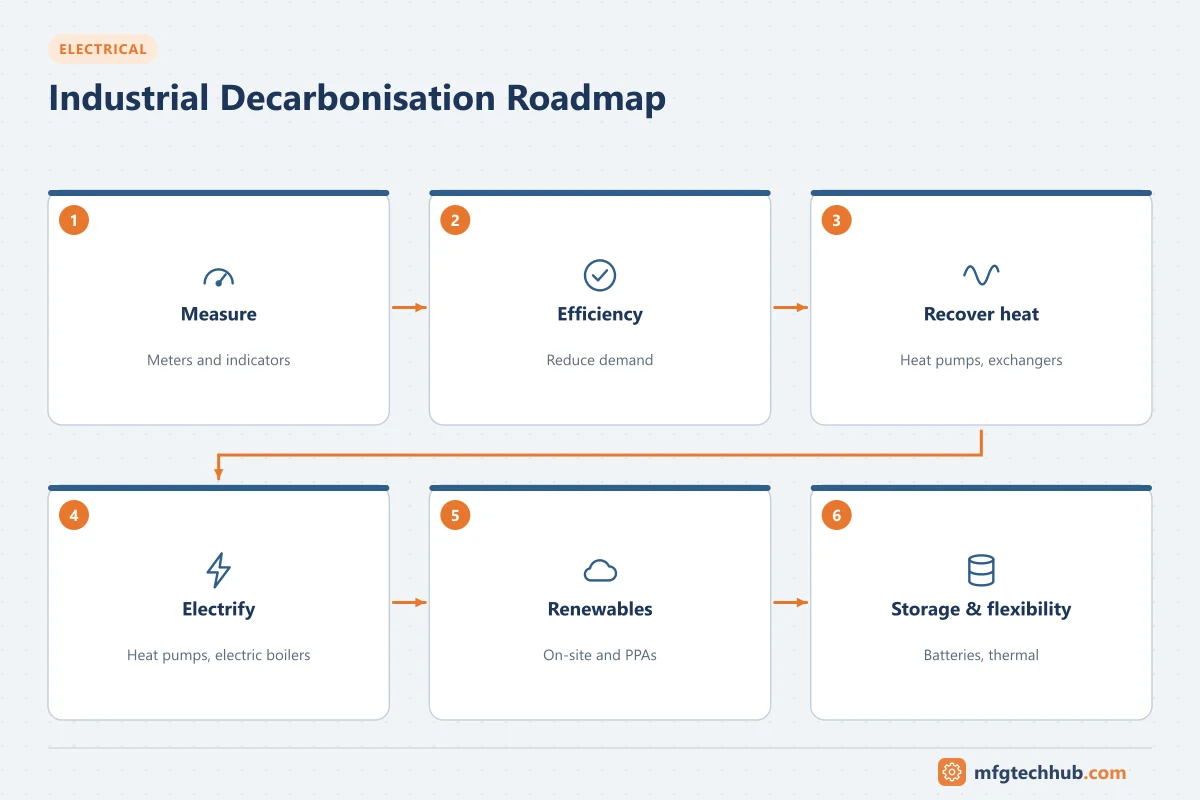
A practical roadmap
- Establish metering and a baseline.
- Fix quick wins: leaks, idle running, poor control, steam traps.
- Invest in efficiency upgrades with good payback.
- Recover waste heat.
- Plan electrification and renewable supply as part of long-term investment.
- Report progress transparently.
Frequently asked questions
What is the quickest way to cut industrial energy use?
Usually operational measures: switching off equipment when it is not needed, fixing compressed air leaks, correcting control settings, and repairing failed steam traps. These cost little and are often identified quickly once energy metering is in place.
Are heat pumps suitable for industrial processes?
Industrial heat pumps are well suited to low- and medium-temperature heat, for example for washing, pasteurizing, drying and space heating, especially where waste heat is available as a source. Suitability depends on required temperatures, available heat sources and electricity prices, so a feasibility study is recommended.
What is ISO 50001?
ISO 50001 is the international standard for energy management systems. It provides a framework for setting energy policy and targets, measuring performance, implementing improvements and reviewing results, similar to how ISO 9001 manages quality.
Key takeaways
- Sustainable energy starts with measurement and an energy management system such as ISO 50001.
- Efficiency and heat recovery usually deliver the lowest-cost reductions.
- Electrification with heat pumps and renewable electricity addresses process heat emissions.
- Instrumentation and automation make energy performance visible, controllable and reportable.
Related tutorials
Before you apply this in a plant: this article is for education. Always check the current edition of the relevant standards, the manufacturer's documentation for your exact product and version, and your site's procedures. Safety-related work needs qualified personnel. See our editorial policy.