
How MES Systems Work: Data Flow and Architecture
What is MES Data Flow?

Data flow in MES refers to how information moves between different components of the manufacturing process. MES captures, processes, and shares data across various systems, ensuring transparency and efficiency. The key stages of data flow in MES include:
- Data Collection
- MES gathers data from machines, sensors, and operators in real-time.
- Example: Collecting temperature readings from a furnace or tracking operator login times.
- Data Processing
- The raw data is transformed into actionable information using analytics and algorithms.
- Example: Converting machine vibration data into predictive maintenance alerts.
- Data Storage
- MES stores processed data for historical analysis and regulatory compliance.
- Example: Archiving production records to analyze trends over time.
- Data Distribution
- MES shares insights with connected systems like ERP, SCADA, or PLM.
- Example: Sending real-time production updates to the ERP for inventory adjustments.
Key Components of MES Data Flow
- Inputs: Data sources such as sensors, machines, and manual inputs from operators.
- MES Core: The system that processes, analyzes, and stores the data.
- Outputs: Dashboards, reports, or integration with other systems (ERP, SCADA).
- Feedback Loop: Insights from MES inform real-time adjustments on the shop floor.
MES Architecture
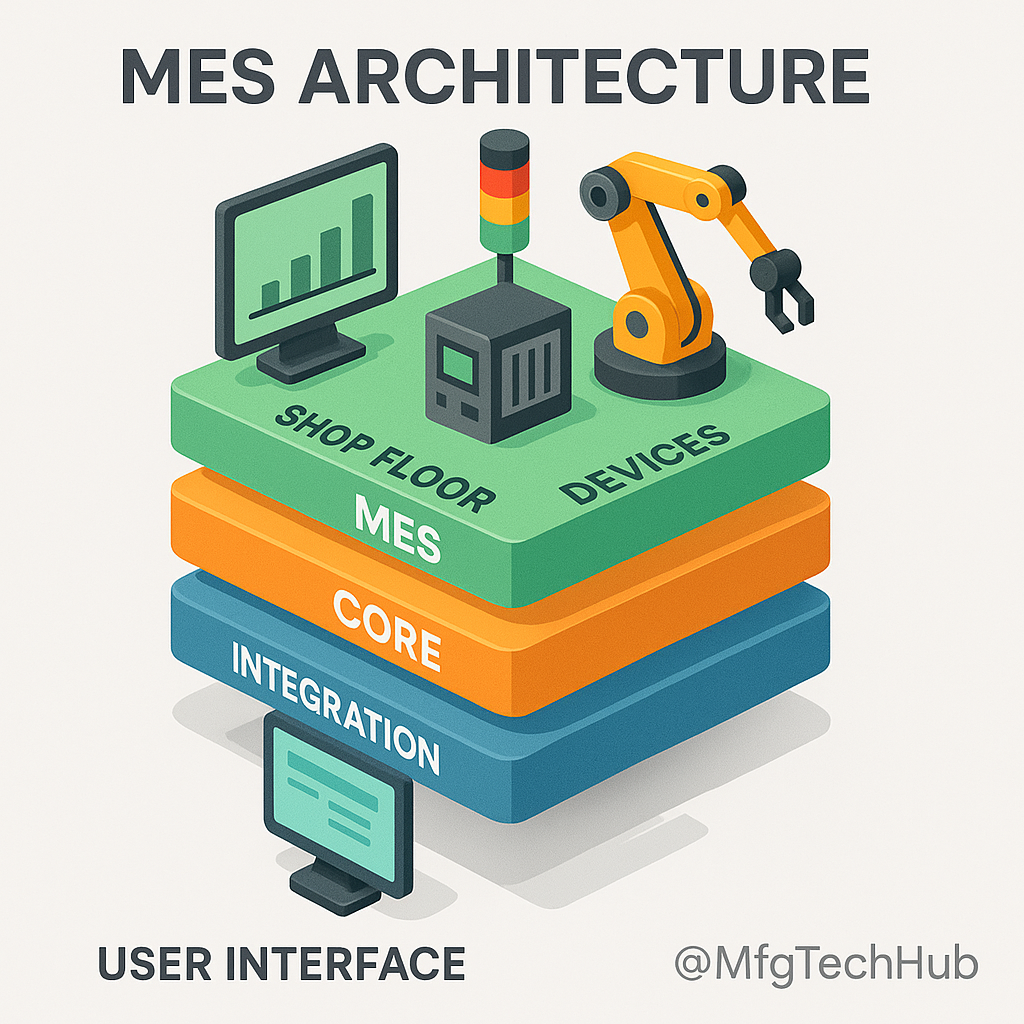
The architecture of an MES outlines how its components are structured and interact with one another. A typical MES architecture consists of:
1. Data Sources (Shop Floor Level)
- Includes sensors, machines, IoT devices, and manual input terminals.
- Data is collected from production lines in real-time.
2. Data Integration Layer
- Connects the shop floor to MES via protocols like OPC-UA, MQTT, or APIs.
- Ensures seamless communication between MES and other systems like SCADA or ERP.
3. MES Core Layer
- The heart of the system, where data is processed and analyzed.
- Includes modules for scheduling, quality control, inventory management, and more.
4. Presentation Layer (User Interface)
- Dashboards and reports display actionable insights.
- Example: Real-time production KPIs shown on an operator’s screen.
Types of MES Architecture
1. Monolithic Architecture
- Single system handling all MES functionalities.
- Pros: Simplicity, easier to maintain.
- Cons: Limited scalability.
2. Modular Architecture

- Consists of independent modules (e.g., scheduling, quality management).
- Pros: Scalability, flexibility.
- Cons: Requires robust integration.
3. Cloud-Based Architecture
- MES hosted on the cloud for remote access.
- Pros: Cost-effective, accessible from anywhere.
- Cons: Dependent on internet connectivity.
How MES Works: Step-by-Step
- Input from Data Sources: MES begins by collecting data from machines, sensors, and operators using integration protocols.
- Processing in MES Core: Data is processed to generate actionable insights, such as detecting anomalies or calculating production efficiency.
- Real-Time Monitoring: Operators and managers access dashboards to monitor live production metrics like OEE, cycle time, and quality rates.

An MES dashboard with key performance indicators such as uptime, quality rate, and inventory management, shown on a widescreen monitor - Data Sharing: MES communicates with ERP for inventory updates or SCADA for control adjustments.
- Feedback to Shop Floor: Insights from MES inform real-time decisions, like scheduling maintenance or adjusting production speed.

MES insights inform real-time shop floor decisions like maintenance scheduling and production speed adjustment


Benefits of Understanding MES Data Flow and Architecture
- Operational Transparency
- Real-time visibility into production processes.
- Identifies bottlenecks and inefficiencies.
- Improved Decision-Making
- Data-driven insights help in making informed operational and strategic decisions.
- Enhanced Integration
- MES connects various systems, ensuring streamlined operations and communication.
- Future-Proof Manufacturing
- Scalable architecture supports future expansions and technological upgrades.
Challenges in MES Data Flow and Architecture
- Complexity: Integrating MES with legacy systems can be challenging.
- Data Overload: Managing large volumes of data requires robust infrastructure.
- Cost: Implementing advanced architecture may require significant investment.
- Skill Gap: Employees may need training to interpret and act on MES data effectively.
Real-Life Example: MES in Electronics Manufacturing
In an electronics plant:
- Data Flow: MES collects data from SMT machines, monitors assembly line output, and tracks operator performance.
- Architecture: A modular MES integrates seamlessly with the ERP for inventory updates and SCADA for machine control.
- Outcome: Improved OEE, reduced downtime, and enhanced product quality.
Extended Insights: Future Directions in MES Architecture
- Integration with IoT: Modern MES increasingly connects with IoT-enabled sensors, allowing granular real-time monitoring of every machine component.
- AI and Machine Learning: Predictive algorithms analyze MES data to anticipate failures, reduce unplanned downtime, and optimize production schedules.
- 5G Connectivity: Low-latency networks enable faster MES-to-machine interactions, vital for high-speed assembly and continuous process industries.
- Digital Twins: By creating a virtual replica of the production floor, MES can simulate and test workflow improvements before real deployment.
Additional Use Cases Across Industries
- Automotive: MES monitors welding quality in real-time, ensuring body-frame integrity and reducing recalls.
- Pharmaceuticals: MES ensures compliance with FDA and GMP by maintaining strict batch records and environmental monitoring logs.
- Food & Beverage: Tracks expiration dates, manages traceability, and enforces recipe adherence to maintain safety standards.
- Aerospace: Records every part and assembly step, supporting long-term traceability and regulatory audits.
Practical Considerations for Implementation
- Scalability Planning: Start small with modular MES deployment and expand functionality over time.
- Change Management: Employee training and buy-in are crucial to ensure smooth adoption.
- Cybersecurity: As MES integrates with cloud and IoT, strong authentication, firewalls, and encryption are mandatory.
- Data Governance: Companies must define ownership, retention, and compliance rules for MES data.
Conclusion
Understanding MES data flow and architecture is not only about knowing how information travels through machines, networks, and dashboards — it’s about recognizing how MES empowers modern factories to be transparent, efficient, and resilient. By expanding its role with IoT, AI, and cloud-based integration, MES is evolving into a central intelligence layer for Industry 4.0. Companies that master MES architecture will achieve higher productivity, improved compliance, and a lasting competitive advantage.